Guide · The Fibre
What Is Pashmina?
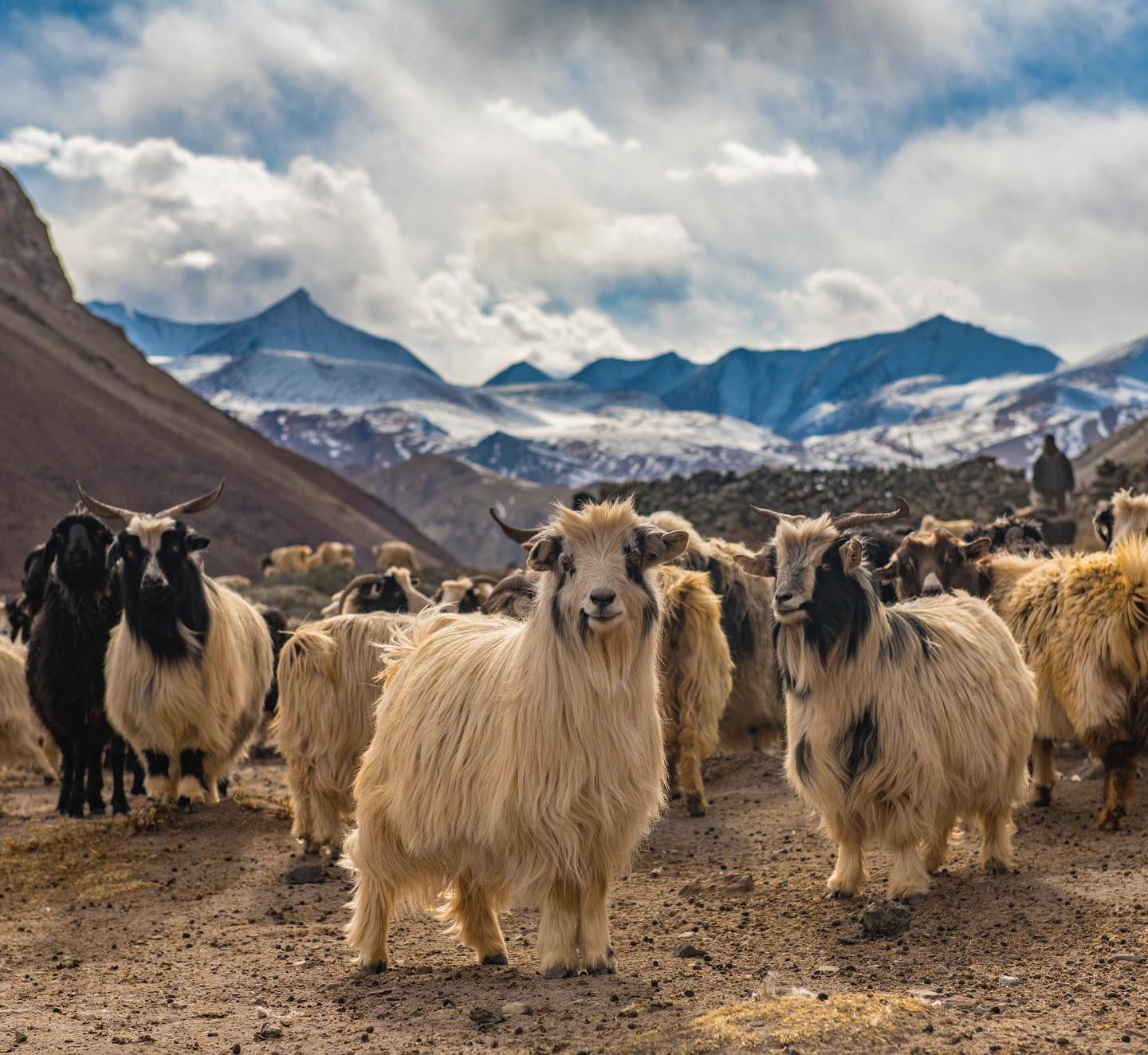
Pashmina is the fine, soft undercoat of the Changthangi goat, which lives at around 4,000 metres on the Changthang plateau of Ladakh. The fibre is combed by hand each spring, then hand-spun and hand-woven in Kashmir into shawls. It is the finest grade of cashmere, and Kashmir Pashmina is protected by a Geographical Indication (GI).
01
What the word means
"Pashmina" comes from pashm, the Persian word for wool, and in Kashmir it has always meant one thing: the soft winter down of the high-mountain goat. In Hindi and Urdu it is written पश्मीना and پشمینہ. A shawl (from the Persian shāl) is the large rectangle of cloth worn around the shoulders, so a pashmina shawl is a shawl woven from that fibre.
02
Which goat pashmina comes from
Pashmina comes from the Changthangi goat (also called Changra), herded by the nomadic Changpa people across the Changthang plateau of eastern Ladakh. Winters there fall to around forty degrees below zero, and to survive them the goat grows an exceptionally fine, warm undercoat beneath its coarse outer hair.
Each spring, as the weather warms, the goats moult. Herders comb the loosened undercoat out by hand; the goats are not sheared. One goat gives only a small amount of usable fibre a year, which is the first reason pashmina is rare.
03
What a pashmina shawl is made of
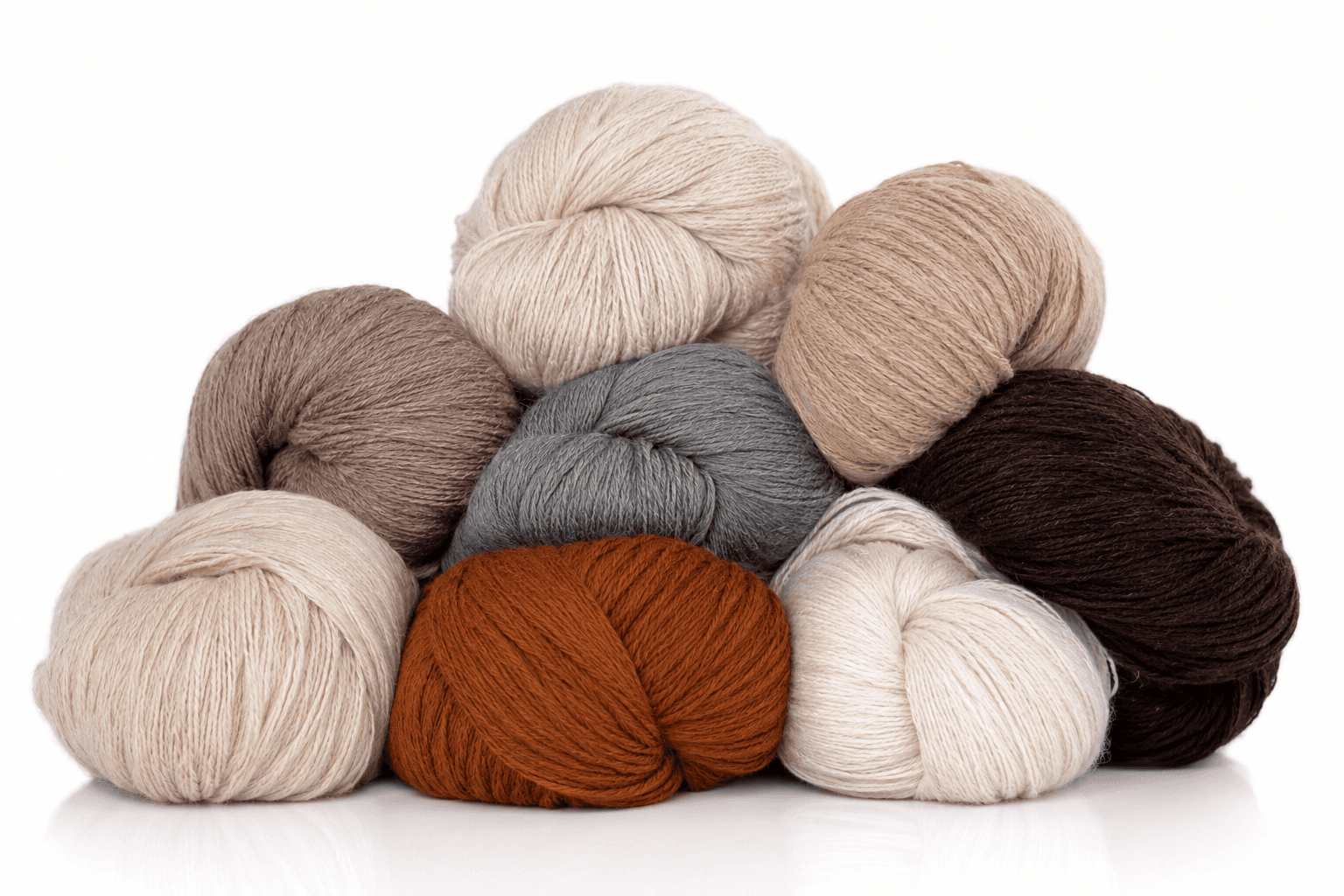
Pure pashmina fibre is very fine: around twelve to sixteen microns across, several times finer than a human hair. That fineness is what makes it so soft and light, and the hollow, crimped structure of the fibre is what makes it so warm for its weight.
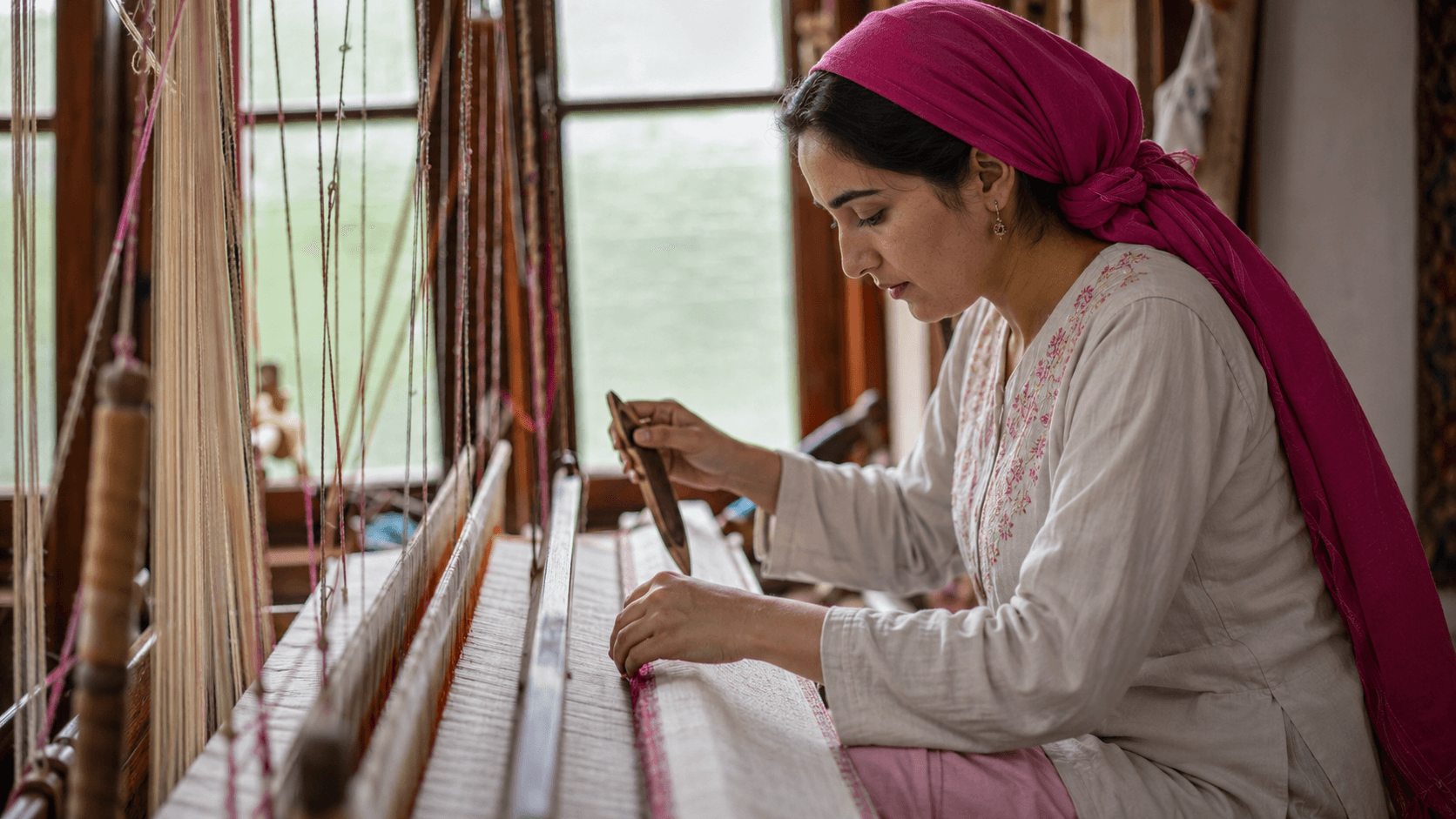
The journey from goat to shawl is done almost entirely by hand:
- Combing: the undercoat is gathered from the goat in spring.
- Cleaning: the coarse guard hair is separated from the down by hand.
- Spinning: the down is spun on a wooden charkha in Srinagar, too fine for most machines.
- Weaving: the yarn is woven on a hand loom.
- Finishing: the cloth is washed, dyed and, for our pieces, embroidered by hand in sozni.
04
A short history of the Kashmir shawl
Shawl weaving in Kashmir is centuries old. The fifteenth-century sultan Zain-ul-Abidin is traditionally credited with bringing weavers from Central Asia and building the craft, and under the Mughal emperors Kashmiri shawls became prized court gifts.
In the late eighteenth and nineteenth centuries, the shawls reached Europe and became a fashion sensation. Weaving towns there, above all Paisley in Scotland, copied their teardrop motif so widely that the world still calls it paisley (see Kashmiri embroidery).
05
Why Kashmiri pashmina is famous
Many places produce cashmere. Kashmir is famous because it combines the finest Himalayan fibre with generations of hand-spinning, hand-weaving and embroidery skill found nowhere else. That combination is what the Kashmir Pashmina GI protects. Read how it compares in pashmina vs cashmere.
Questions
Frequently asked
What is pashmina made of?
Pashmina is made from the fine undercoat of the Changthangi goat of Ladakh, combed by hand each spring and then hand-spun and hand-woven in Kashmir.
Which animal does pashmina come from?
The Changthangi (or Changra) goat, a high-altitude breed herded by the nomadic Changpa people on the Changthang plateau of eastern Ladakh.
Is pashmina a fabric or a wool?
Pashmina is a fibre, a very fine goat wool, which is then spun and woven into fabric. A pashmina shawl is a shawl woven from that fibre.
Are pashmina shawls banned?
No. Pashmina is legal everywhere. The banned fibre is shahtoosh, which comes from the endangered Tibetan antelope (chiru); its trade is prohibited worldwide under CITES. The two are often confused.
Is a pashmina shawl warm?
Yes. Pashmina is one of the warmest natural fibres for its weight, which is why a shawl that weighs very little can be worn through a Kashmiri winter.
Is pashmina handmade?
Genuine Kashmiri pashmina is hand-combed, hand-spun and hand-woven. Machine-made shawls sold as pashmina are usually blends or other fibres.
What does pashmina mean?
It comes from pashm, the Persian word for wool. In Kashmir it means the soft winter undercoat of the high-mountain goat, and the cloth woven from it.