Guide · The Difference
Pashmina vs Cashmere
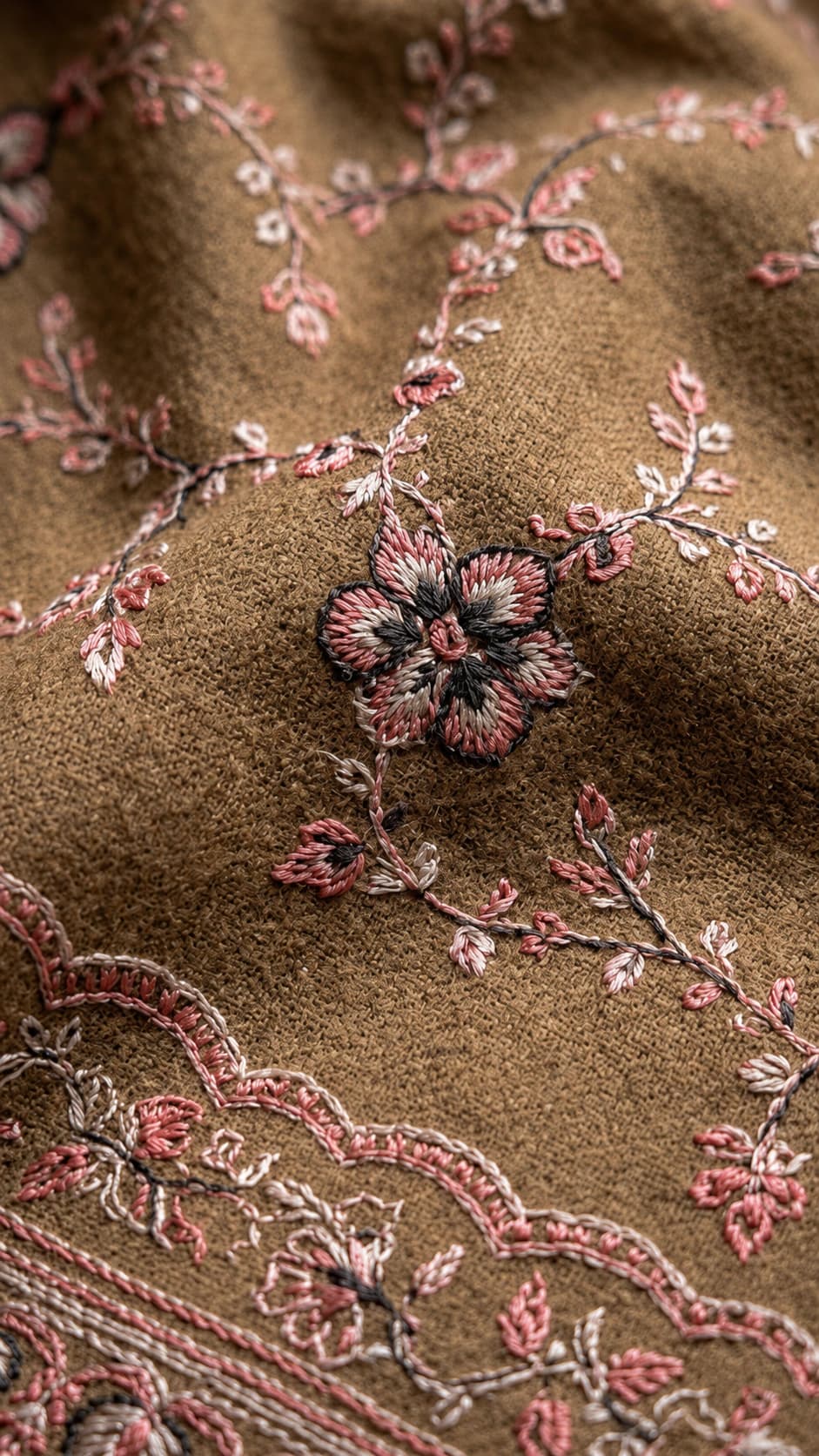
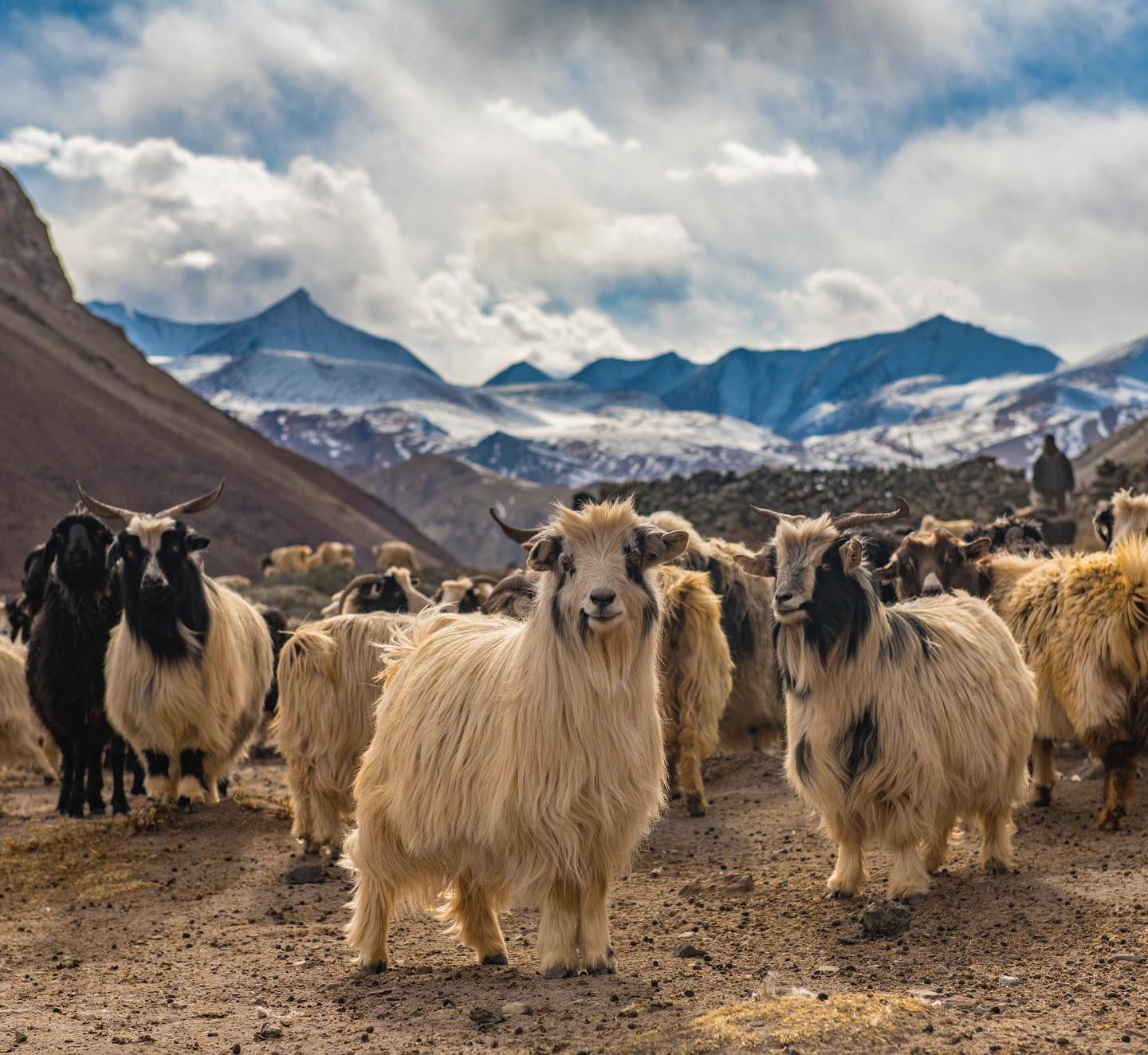
All pashmina is cashmere, but not all cashmere is pashmina. Both come from the soft undercoat of cashmere goats. Pashmina is the finest grade: the Changthangi goat's fibre from Ladakh, about 12 to 16 microns, hand-spun and hand-woven in Kashmir. Most commercial cashmere is slightly coarser (up to 19 microns), comes from other regions and is machine-spun and woven. Pashmina is lighter, softer and rarer.
01
Pashmina and cashmere: the difference
- Source: pashmina comes from the Changthangi goat of high Ladakh; commercial cashmere comes from goats raised in many regions, chiefly Mongolia and China.
- Fineness: pashmina is around 12 to 16 microns; cashmere can be up to 19 microns.
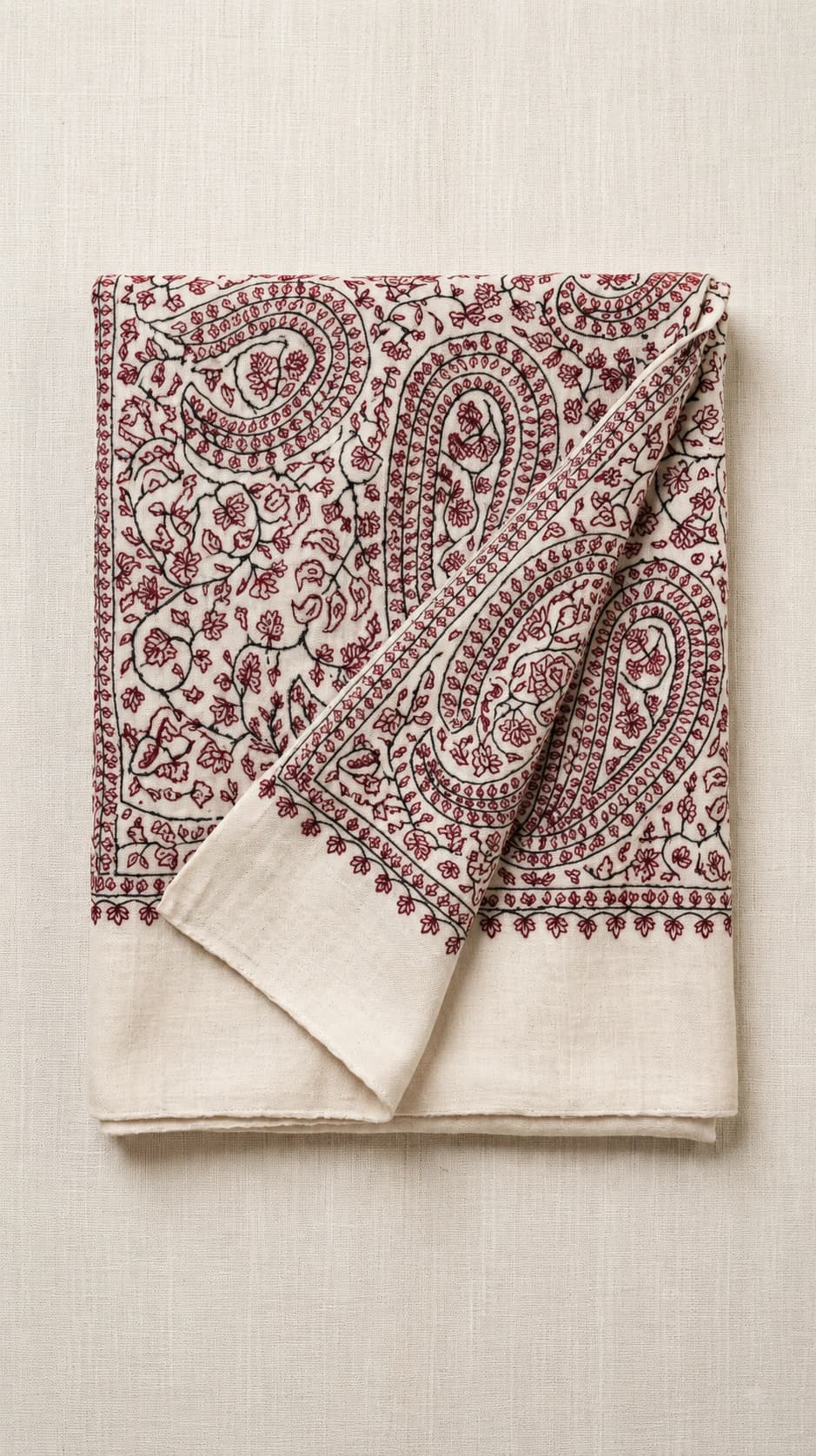
- Making: pashmina is hand-spun and hand-woven in Kashmir; most cashmere is machine-spun and machine-woven or knitted.
- Feel: pashmina is lighter and finer, with a soft, slightly dry hand; cashmere is often thicker and denser.
- Protection: Kashmir Pashmina is a registered Geographical Indication; "cashmere" is a fibre name.
02
Which is better, pashmina or cashmere?
For a shawl, real pashmina: it is finer, lighter and warmer for its weight, and the hand-weaving gives it a softer drape. Cashmere is excellent for knitwear and everyday scarves. Pashmina usually costs more because the fibre is rarer and the work is by hand (see pashmina prices).
03
Pashmina vs wool
Ordinary sheep's wool is several times coarser than pashmina, so it is warmer only when much thicker and heavier, and it can feel scratchy. Kashmir also weaves fine wool shawls (often called raffal), which are lovely, but they are not pashmina. A "Kashmiri shawl" can be either, so check the composition.
04
Shawl vs stole vs scarf vs wrap
- Shawl: the largest, around 100 × 200 cm, big enough to wrap the shoulders and arms.
- Stole: narrower, around 70 × 200 cm, worn over the shoulders or around the neck.
- Scarf: smaller still, worn mainly at the neck.
- Wrap: a way of wearing, not a size; most often a shawl worn wrapped around the body (see how to wear a shawl).
- Poncho: a garment with a head opening, sewn to stay on, unlike a shawl that is draped.
Questions
Frequently asked
What is the difference between pashmina and cashmere?
Pashmina is the finest grade of cashmere: fibre from the Changthangi goat of Ladakh, about 12 to 16 microns, hand-spun and hand-woven in Kashmir. Commercial cashmere is up to 19 microns, comes from other regions and is usually machine-made.
Is pashmina better than cashmere?
For a shawl, yes. Real pashmina is finer, lighter and warmer for its weight. Cashmere is excellent for knitwear and everyday scarves.
Is pashmina the same as cashmere?
Pashmina is a type of cashmere, the finest. All pashmina is cashmere, but not all cashmere is pashmina.
Why is pashmina more expensive than cashmere?
The fibre comes from one high-altitude goat in small amounts, and real pashmina is spun and woven by hand rather than by machine.
What is the difference between a shawl and a stole?
Size. A shawl is around 100 × 200 cm and wraps the shoulders and arms; a stole is narrower, around 70 × 200 cm.
What is the difference between a Kashmiri shawl and a pashmina shawl?
Kashmiri shawl means a shawl made in Kashmir, which can be fine wool or pashmina. A pashmina shawl is made from pashmina fibre.