Guide · The Needle
Sozni, Jamawar, Kani & Paisley
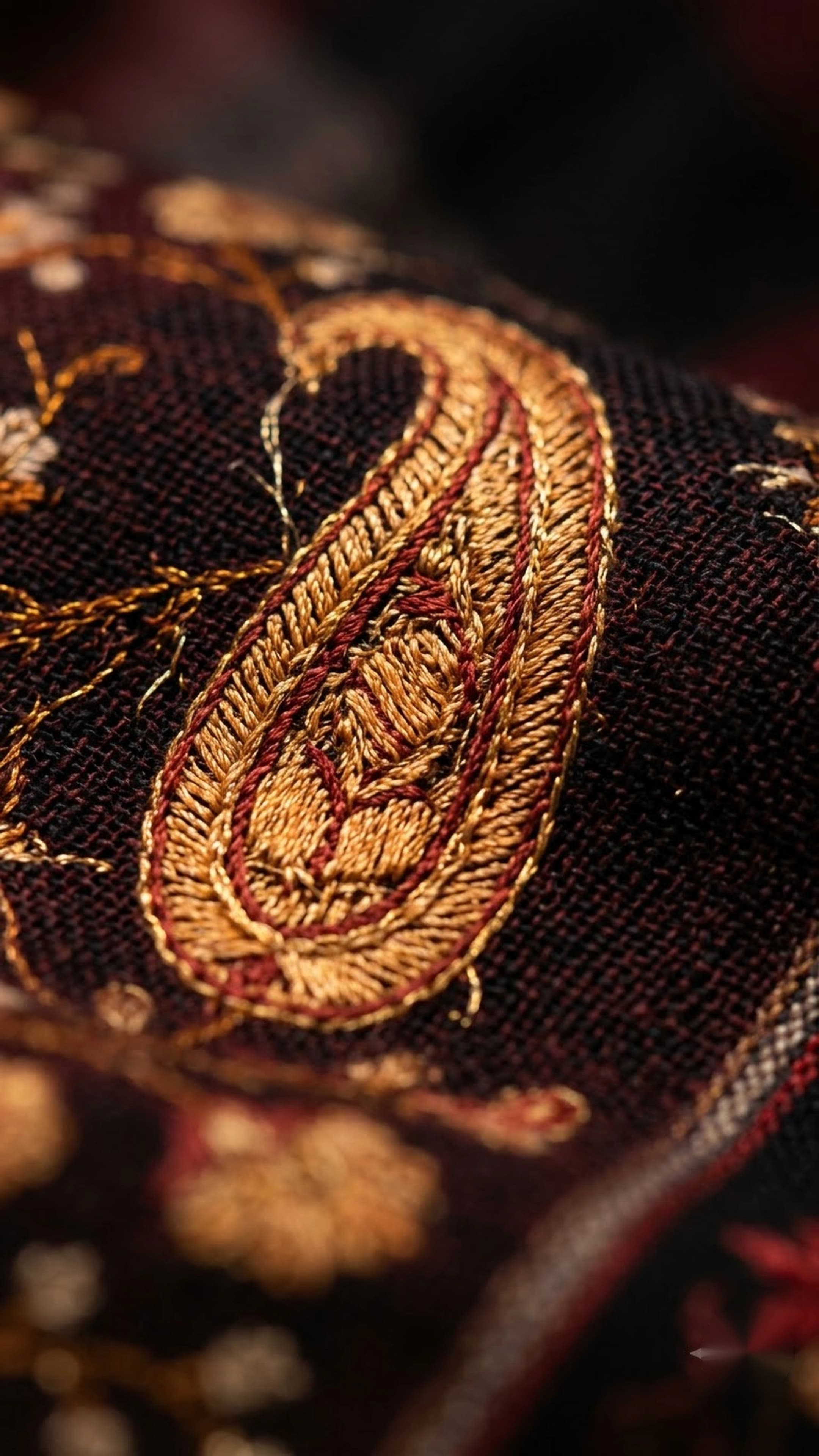
Sozni is Kashmir's fine needle embroidery, worked in silk or fine wool thread on pashmina. A jamawar shawl is covered in a dense, all-over pattern, usually paisley, and can be woven or embroidered. A kani shawl is woven, not embroidered: the pattern is built on the loom with small wooden spools called kanis. Paisley is the Kashmiri buta, a teardrop motif named after the Scottish town that copied it.
01
What is sozni embroidery?
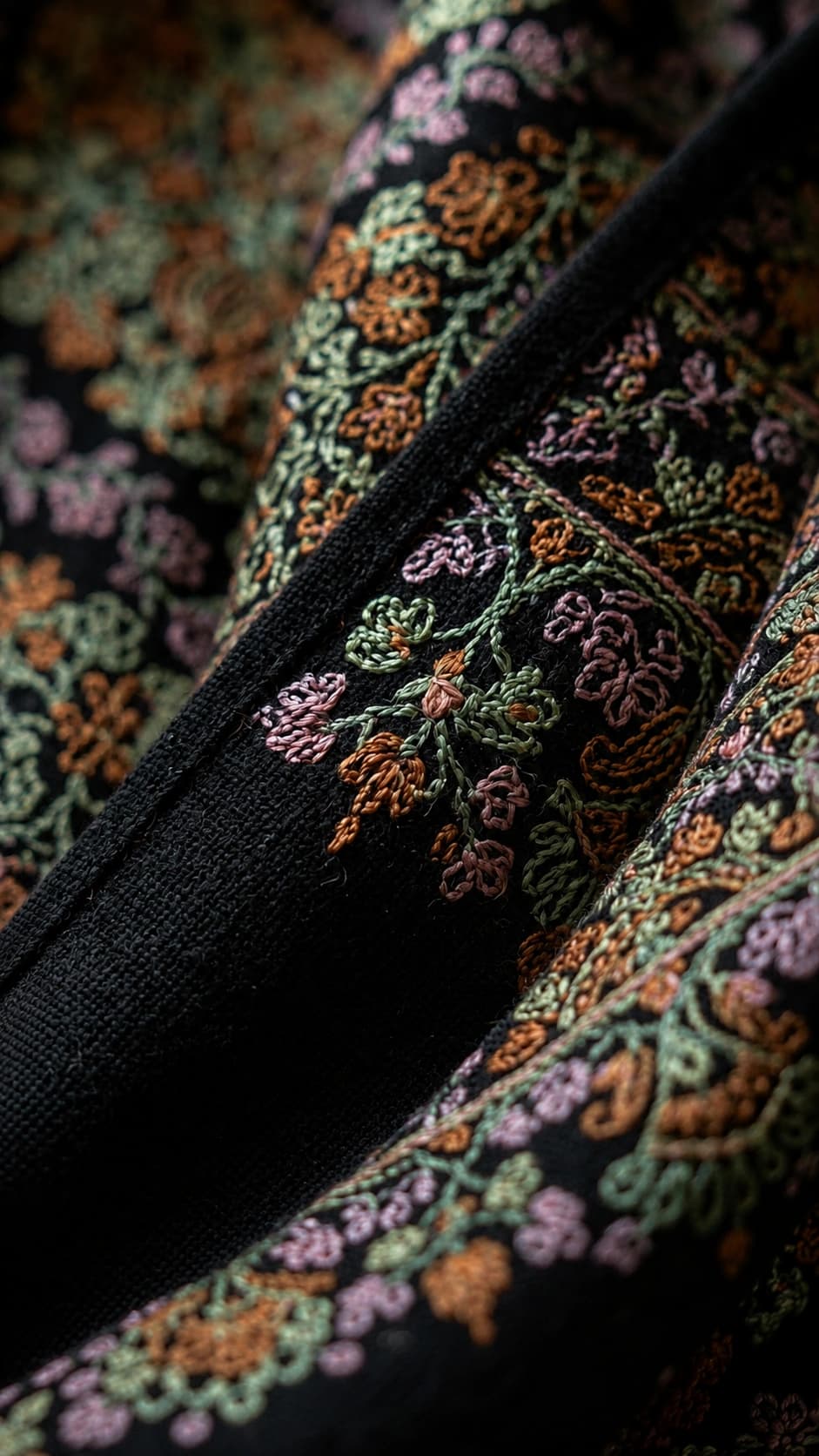
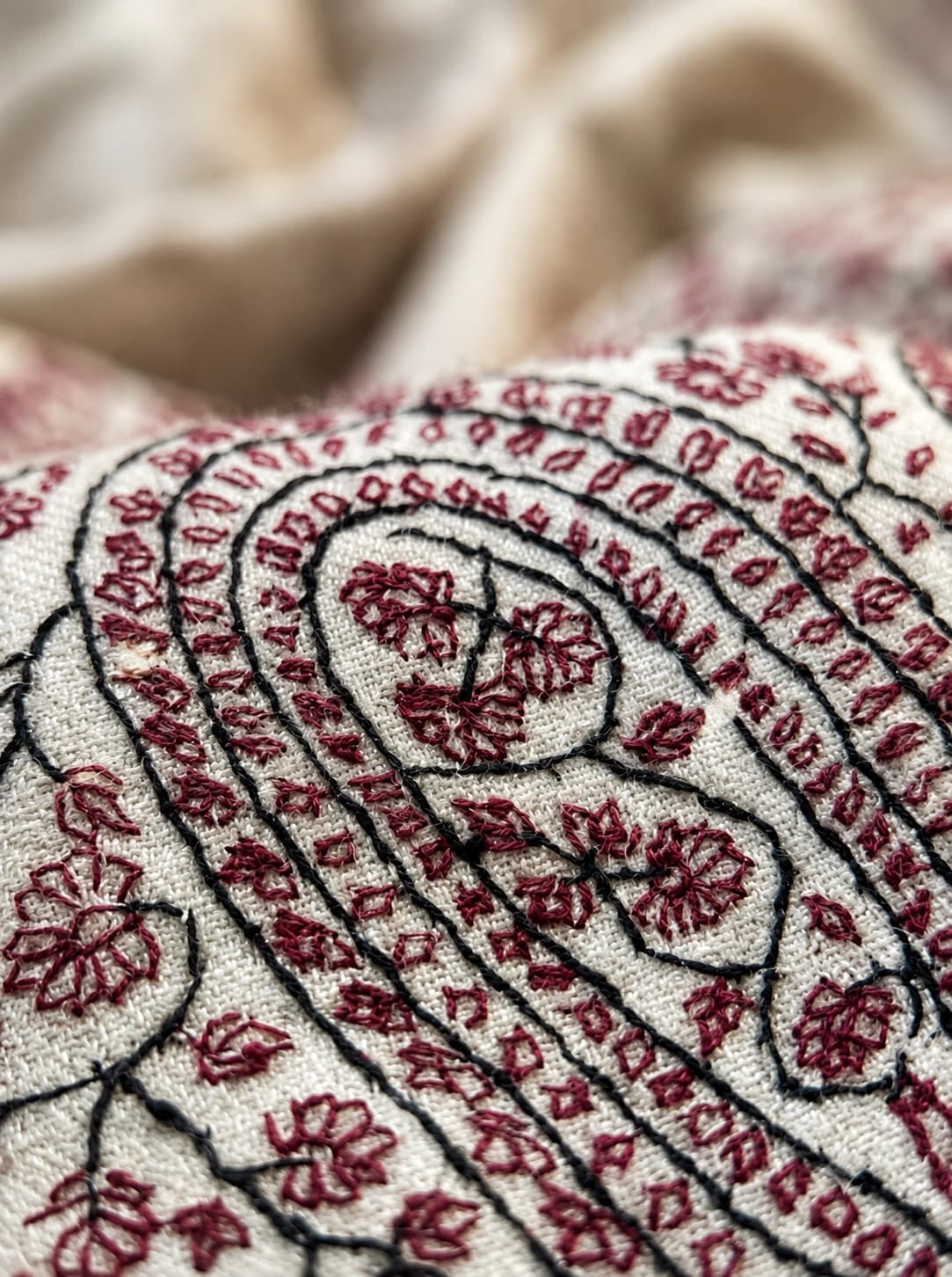
Sozni (from sozan, needle) is hand embroidery done with a fine needle, mostly in satin and stem stitch, in silk or fine wool thread. The motifs come from the valley: paisleys, chinar leaves, vines, blossom and birds. It is slow work. Every Qashmirè piece is sozni embroidered.
Sozni shawls are named by how much of the cloth is worked:
- Hashidar: embroidery along the borders only.
- Jaali or jaaldar: a net or lattice of embroidery across the whole field, like Nocturne.
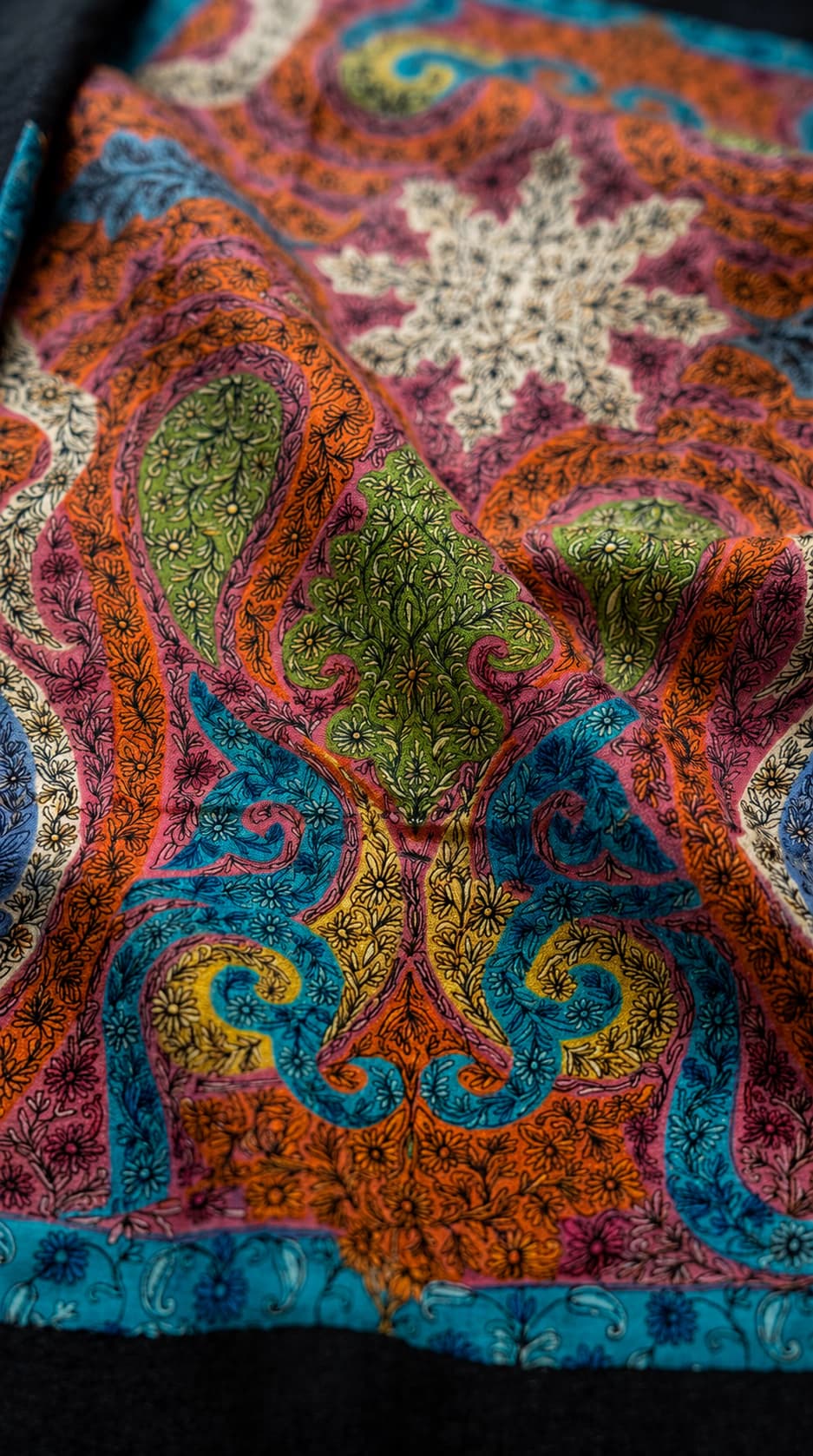
- Kalamkari (kalamdar): embroidery so dense and many-coloured it reads like a painting, like High Summer.
- Dorukha: double-sided embroidery that looks finished on both faces, the most demanding of all.
02
What is a jamawar shawl?
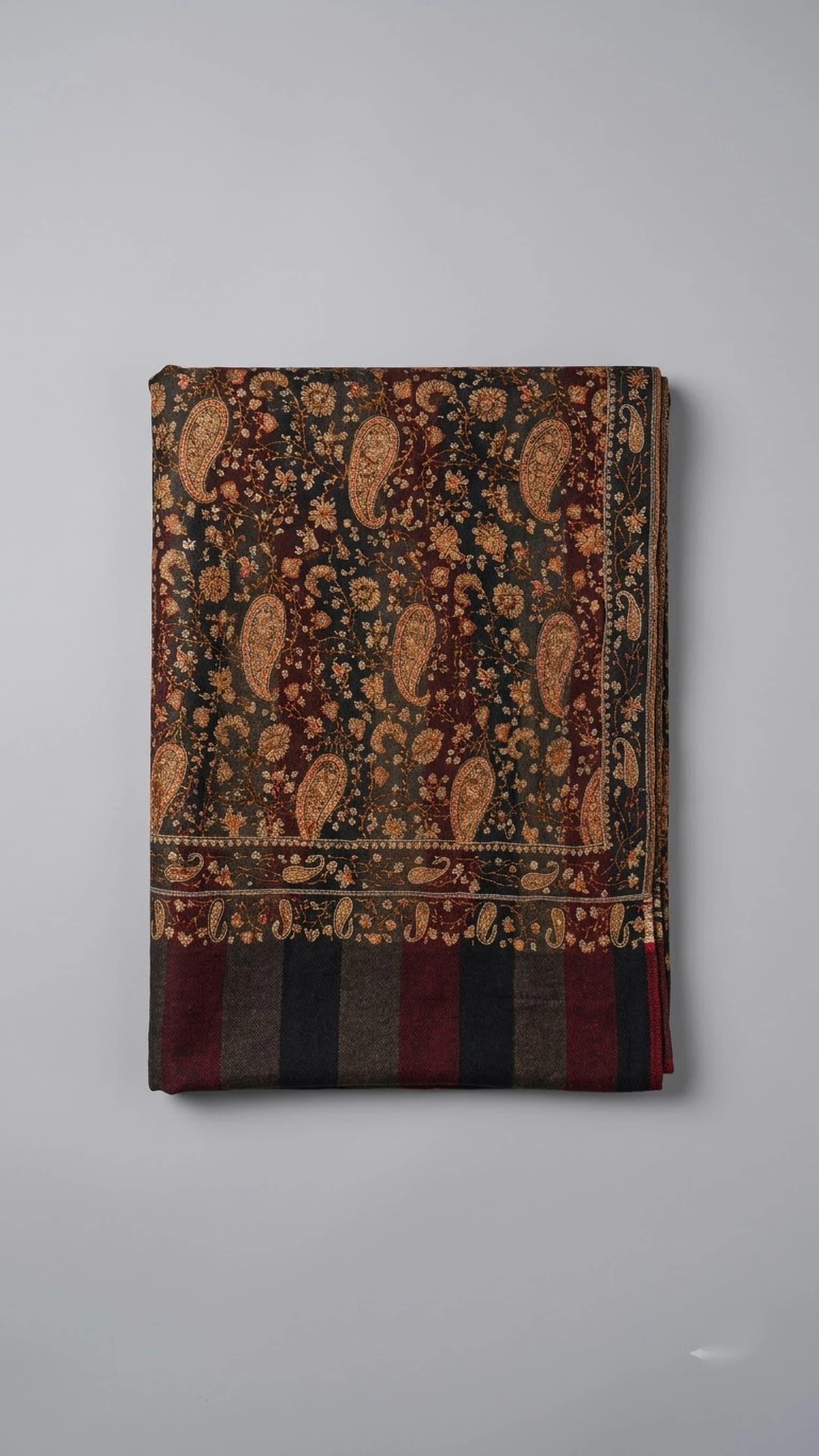
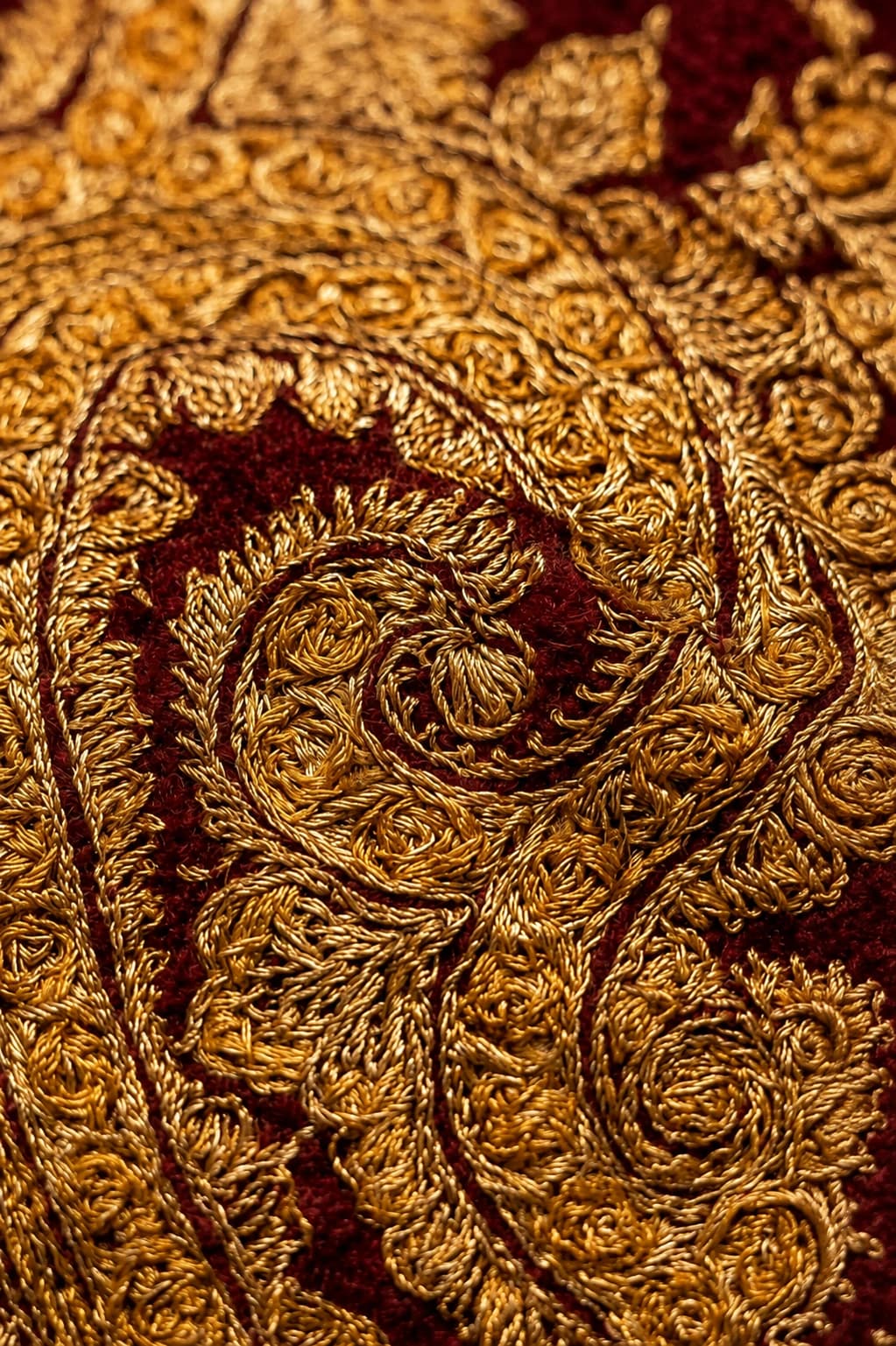
"Jamawar" joins jama (robe) and war (length): originally a richly patterned fabric made in lengths for robes at the Mughal court. Today a jamawar shawl means one covered in a dense, all-over pattern, usually paisley and vine, either woven or worked entirely by needle. A hand-embroidered jamawar such as Regalia leaves almost none of the ground showing, which is why jamawar shawls are among the most expensive. Jamawar pashmina is as warm as any pashmina, a little heavier because of the needlework. See our jamawar shawls.
03
What is a kani shawl?
A kani shawl is woven, not embroidered. Instead of a shuttle, the weaver uses dozens of small wooden spools called kanis, each holding one colour, and builds the pattern row by row, following a coded pattern script called the talim. The village of Kanihama near Srinagar is famous for it, and the Kani shawl is itself a registered GI. A complex kani can take well over a year.
To identify a real kani shawl, look at the back: hand weaving leaves short cut ends where each colour turns. Machine copies have long loose threads floating across the back.
04
Paisley: history and meaning
The teardrop motif is the Kashmiri buta (also boteh, or badam, almond), a Persian design that became the signature of the Kashmir shawl. When the shawls became the height of fashion in Europe in the late eighteenth and nineteenth centuries, mills in Paisley, Scotland, produced so many imitations that the motif took the town's name. Shop our paisley pashmina shawls.
05
Tilla and aari
Two more Kashmiri techniques you will meet. Tilla is metallic gold or silver thread laid on the surface and couched down with a fine stitch, often seen on pherans (see the pheran and the shawl). Aari is chain stitch made with a hooked awl. It is faster than sozni and common on woollen shawls and furnishings.
Questions
Frequently asked
What is sozni embroidery?
Sozni is Kashmir's fine hand embroidery, worked with a needle in silk or fine wool thread on pashmina, with motifs such as paisleys, chinar leaves and vines.
What is a jamawar shawl?
A shawl covered in a dense, all-over pattern, usually paisley and vine. It can be woven or hand-embroidered. The name comes from jama (robe) and war (length).
What is a kani shawl?
A shawl woven on a hand loom using small wooden spools called kanis, one for each colour, following a coded pattern called the talim. The pattern is woven in, not embroidered.
What is the difference between kani and pashmina?
Pashmina is the fibre; kani is a weaving technique. A kani pashmina shawl is pashmina woven in the kani technique.
Is a jamawar shawl warm?
Yes. A jamawar pashmina shawl is as warm as any pashmina and slightly heavier, because of the dense needlework.
Where does the paisley pattern come from?
From the Kashmiri buta, a Persian teardrop motif. It is named after Paisley in Scotland, whose mills copied Kashmir shawls in the nineteenth century.