Guide · Authenticity
How to Tell Real Pashmina from Fake
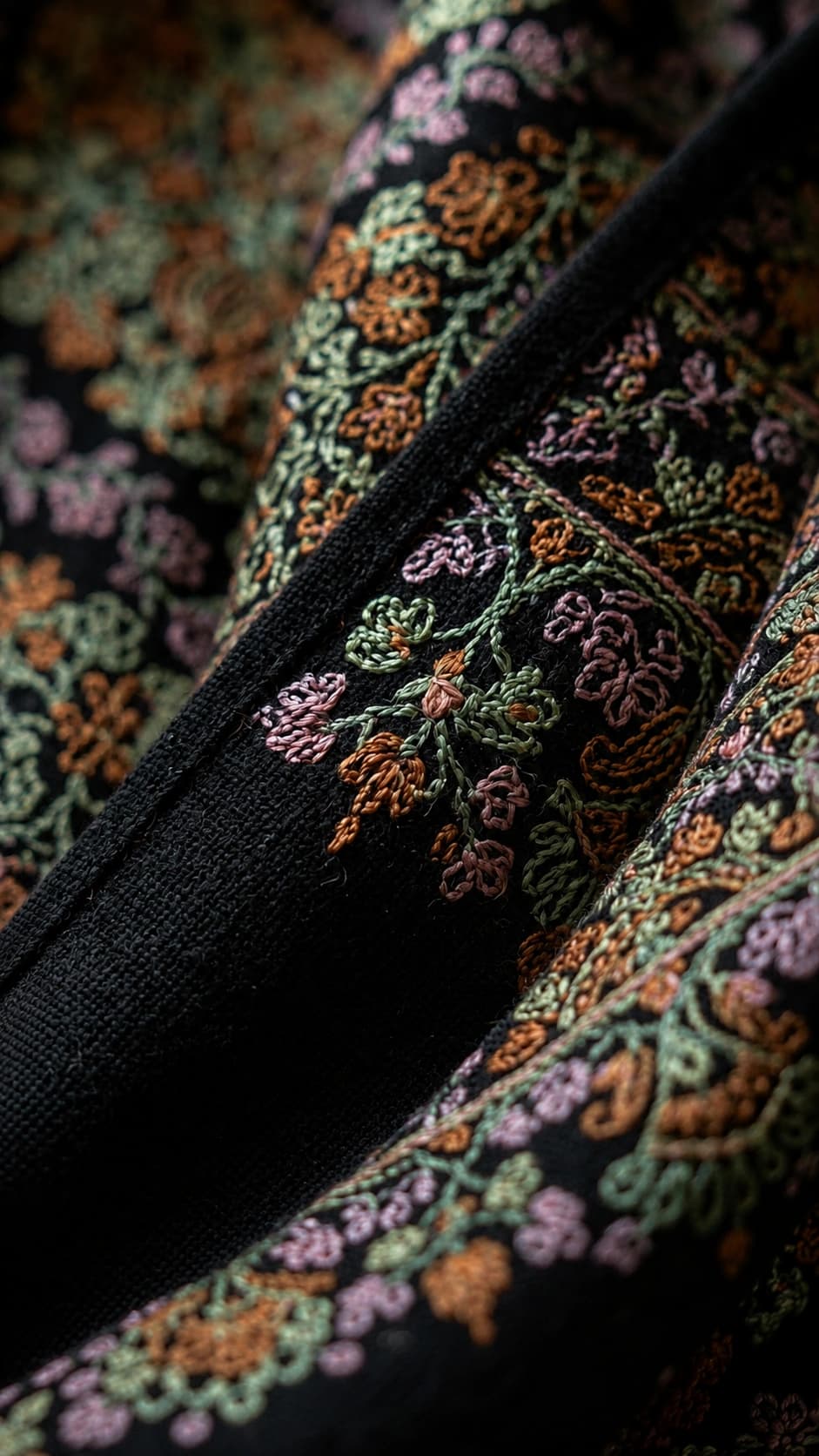
Real pashmina is warm but feather-light, slightly matte rather than shiny, and shows the small irregularities of hand weaving. A thread from the fringe burns to a crumbly ash that smells of hair, never to a hard plastic bead. For proof, look for the Kashmir Pashmina GI label. A "pure pashmina" shawl priced like an ordinary scarf is almost never real.
01
Why there is so much fake pashmina
Outside Kashmir, "pashmina" became a shop word for any soft wrap. Most shawls sold under the name are viscose, acrylic, ordinary wool or a blend, often machine-made. Real pashmina is the fine undercoat of the Changthangi goat of Ladakh, hand-spun and hand-woven in Kashmir (see what pashmina is). There is very little of it, which is exactly why it is copied.
Honest blends exist too. A silk-pashmina shawl is a genuine product, as long as it is sold as a blend. The problem is a blend, or no pashmina at all, sold as "100% pashmina".
02
7 ways to identify pure pashmina
1. The GI label. Kashmir Pashmina is a registered Geographical Indication (GI) in India. Shawls tested and certified under it carry a GI label. It is the most reliable sign you can check without a laboratory, so ask the seller for it.
2. The price. Gathering, spinning and weaving pashmina by hand takes weeks, and embroidery can take months. A "pure pashmina shawl" at the price of a high-street scarf is not pure (see why real pashmina costs what it does).
3. The feel. Real pashmina is soft, slightly dry and matte, and it warms quickly against the skin. Synthetic fakes feel slippery, cool and too smooth, with a plastic sheen.
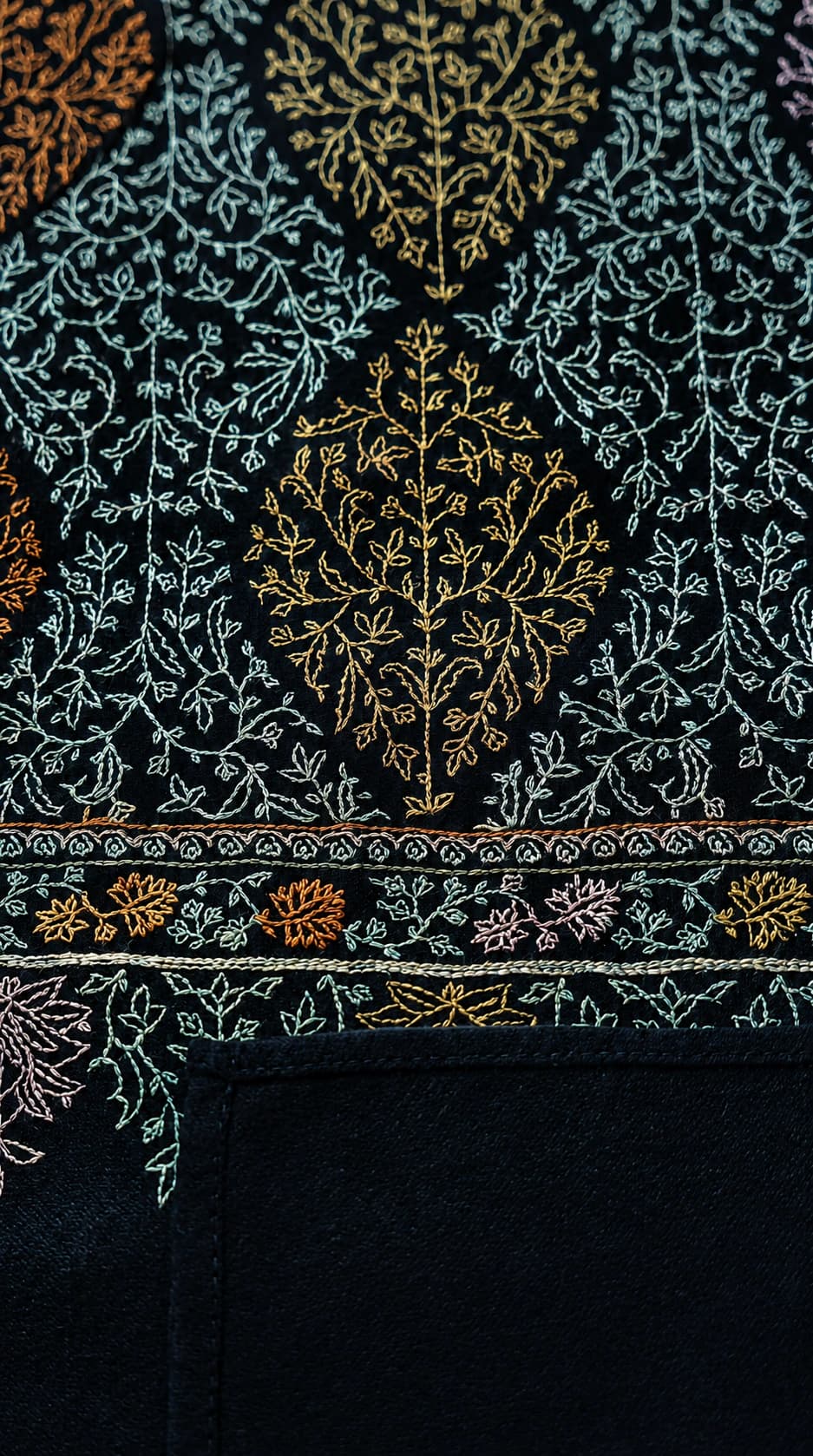
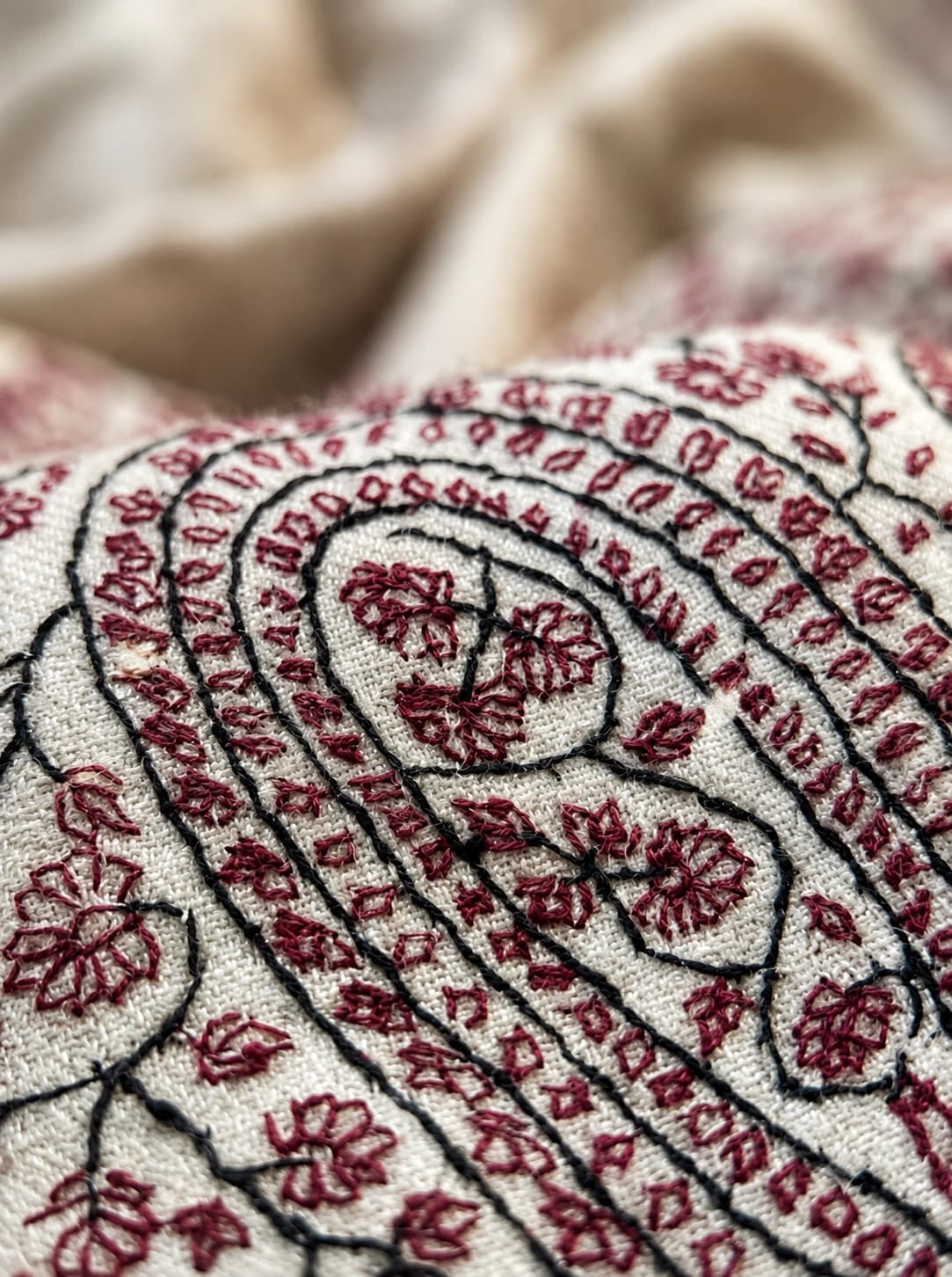
4. The weave. Hold the shawl up to the light. A hand-woven shawl has small, natural variations in the weave. A perfectly even grid usually means a power loom.
5. The burn test. Never burn the shawl itself. Pull one loose thread from the fringe and hold it to a flame. Pashmina, like hair, smells of burning hair and leaves soft ash that crumbles between your fingers. Acrylic and polyester melt into a hard bead and smell of plastic. Viscose burns like paper.
6. The static test. Rub the cloth briskly against itself or your sleeve. Polyester and acrylic crackle, cling and can spark. Pashmina does not.
7. The ring test, and why it misleads. The old test is to pull a shawl through a finger ring. A very fine, plain pashmina can pass, but so can thin viscose or silk, and a genuine embroidered or heavier pashmina shawl will not. Passing the ring proves fineness, not pashmina.
03
How to tell real pashmina online
When you cannot touch the shawl, check the seller instead:
- The composition is stated plainly ("100% pashmina" or the exact blend), not just "pashmina-style" or "pashmina feel".
- It says where the piece is made and whether it is GI-certified.
- There is a clear returns policy, so you can examine it at home.
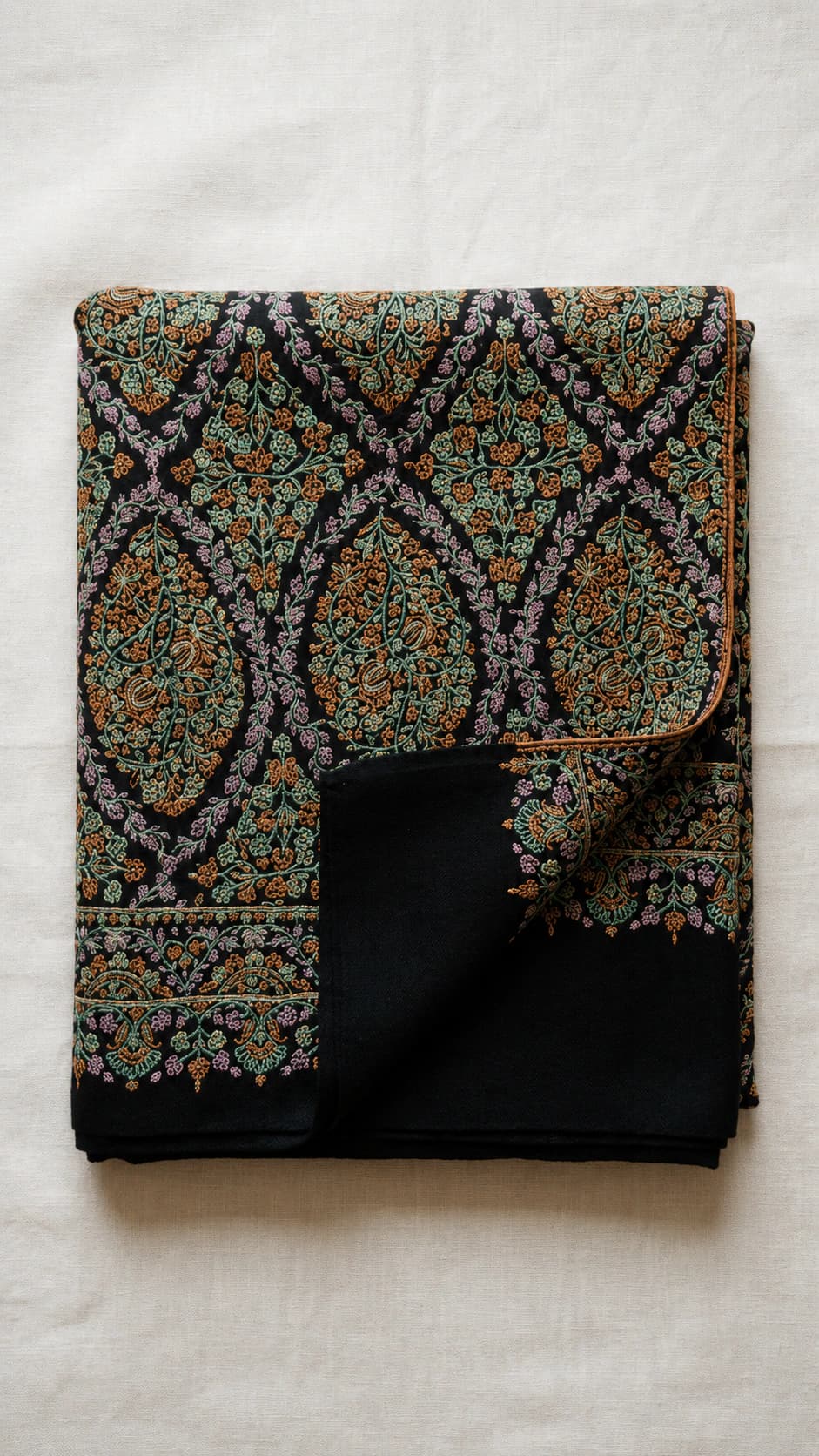
- The photographs show the real weave and embroidery up close, including the back.
- The price is believable for hand-made work.
Every Qashmirè piece is GI-certified Kashmiri pashmina from Srinagar, and you have 15 days to return it if it is not what you expected.
04
Telling a real kani or jamawar shawl
Turn the shawl over. Hand embroidery (sozni) shows the stitching on the back. A hand-woven kani shows short cut ends of coloured weft where each colour turns back. A machine-made copy usually has long loose threads floating across the back and a pattern that repeats with perfect regularity. More in our guide to sozni, jamawar, kani and paisley.
Questions
Frequently asked
How can you tell if a pashmina is real?
Look for the Kashmir Pashmina GI label, a believable price, a soft matte feel and the small irregularities of hand weaving. A thread from the fringe should burn to crumbly ash that smells of hair, not melt into a plastic bead.
Does the ring test prove a shawl is real pashmina?
No. A fine, plain pashmina can pass through a ring, but so can thin viscose or silk, and genuine embroidered or heavier pashmina shawls will not. It only shows that a cloth is fine.
What is the best test for real pashmina?
The GI label is the most reliable check without a laboratory. At home, the burn test on a single fringe thread is the clearest: pashmina smells of burnt hair and turns to soft ash; synthetics melt.
Is a silk-pashmina shawl fake?
Not if it is sold as a blend. Silk-pashmina is a genuine product. It is only misleading when it is labelled 100% pashmina.
How do I check an original pashmina shawl online?
Buy from a seller who states the exact composition, where it is made and whether it is GI-certified, shows close-up photographs of the weave, and offers returns so you can inspect it at home.